Discover how to learn Spanish at home with effective strategies and proven methods to achieve fluency flexibly and affordably.
Discover how to learn Spanish at home with effective strategies and proven methods to achieve fluency flexibly and affordably.
In the age of globalization, learning Spanish has become an essential skill. Today, opportunities to learn Spanish at home have grown significantly thanks to the internet and technology. Below are practical and effective methods for learning Spanish from home, allowing students to achieve their personal and professional goals without the need to attend in-person classes.
In an increasingly globalized world, Spanish has become a key tool for professional and personal growth. For this reason, more and more people are looking for ways to learn Spanish at home as a flexible and accessible alternative. Fortunately, today it is possible to achieve this effectively thanks to technology and access to digital resources.
When appropriate strategies, consistency, and daily practice are applied, it is entirely possible to achieve fluency without attending in-person classes, proving that autonomous learning can be just as solid as traditional learning.
Understanding how to learn Spanish at home not only expands your opportunities, but also allows you to take advantage of benefits that the traditional model often does not offer. Studying from home has become a smart option for those seeking flexibility, savings, and real results.
In addition, autonomous learning strengthens discipline and consistency, two key factors in achieving fluency. With the right strategy, learning from home can be just as effective—or even more effective—than an in-person course.
A structured plan significantly increases consistency.
The key is consistency, not the number of hours.
To develop overall fluency, work in a balanced way:
Separating the skills allows you to detect weaknesses and improve strategically.
One of the best ways to improve listening comprehension and vocabulary in Spanish is by consuming content in the language, such as series and movies. Watching shows with Spanish subtitles helps you learn new words and expressions in context. A very effective technique is listening and repeating the dialogues to improve pronunciation.
Apps like Duolingo, Edvanna, or Memrise are valuable tools for those who wish to review vocabulary, improve grammar, and practice with native speakers. These platforms offer interactive exercises, and in the case of Edvanna, an immersive approach through real-time conversations, creating a dynamic learning environment that enhances confidence and fluency in Spanish. These apps are an ideal complement for self-study at home.
The social method, or language exchange, is a popular strategy for improving fluency in Spanish. Conversing with other learners or native speakers helps you become familiar with different accents and colloquial expressions. There are many language exchange platforms and social media groups where users can connect safely and practice for free.
Changing the language on your mobile devices and social media accounts to Spanish continuously exposes you to everyday vocabulary, helping reinforce your learning in a practical way.
Keeping a diary in Spanish or recording yourself speaking are effective techniques for evaluating progress in writing and pronunciation. These practices not only allow you to track improvements but also help identify areas that need more attention.
Music and podcasts are fun and effective resources for improving listening comprehension. Listening to a variety of genres or podcasts, such as interviews and monologues, helps students get accustomed to different accents and learn common expressions.
Exposing yourself to Spanish on your phone and social media increases your daily contact with the language without additional effort.
Measuring progress keeps motivation high.
Music and podcasts:
Choose content you truly enjoy to stay consistent.
For many learners, staying motivated can be a challenge. Celebrating achievements, even small ones, is a technique that helps reinforce motivation. Additionally, focusing on long-term goals, such as professional advancement or reaching an advanced level of Spanish, makes it easier to persevere in learning.
It’s normal to make mistakes when learning a new language. Accepting mistakes as an essential part of the learning process is key to overcoming the fear of speaking Spanish in front of others. This mindset helps students progress with more confidence and enjoy the learning experience.
Learning Spanish at home is completely possible when you combine planning, consistency, and real immersion.
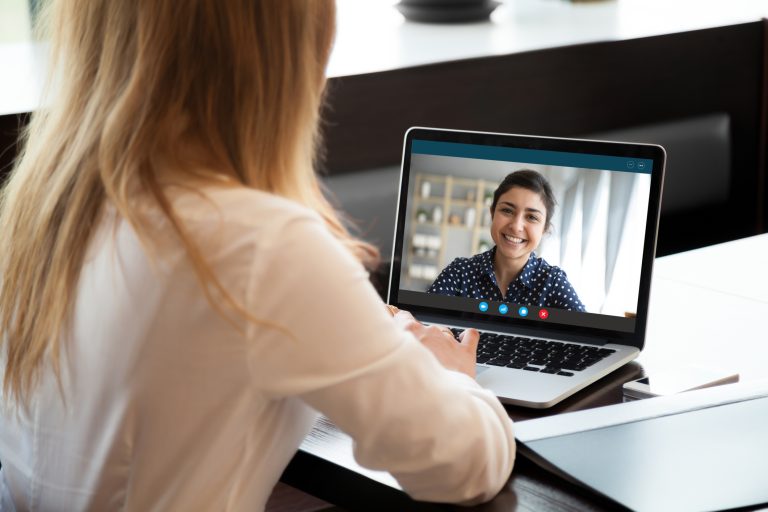
Platforms like Edvanna allow you to practice with real speakers in real time, which accelerates fluency and strengthens confidence.
With a clear plan, consistent practice, and an open mindset toward learning, mastering Spanish stops being a distant dream and becomes an achievable goal.
To learn Spanish at home effectively, you need a structured plan, daily practice, and consistent exposure to the language. It’s best to divide your study time into Listening, Speaking, Reading, and Writing. Dedicate at least 20–30 minutes per day and combine theory with real practice, such as online conversations or repeating dialogues out loud.
Yes, it is absolutely possible. With consistency, immersion in Spanish content (series, podcasts, music), and frequent conversational practice, many learners achieve fluency without attending in-person classes. The key is discipline and daily contact with the language.
It’s not about studying many hours, but about being consistent. Between 20 and 40 well-organized minutes per day can lead to significant progress. The most important factor is maintaining a regular schedule and working on all language skills in a balanced way.
There are several digital platforms that make learning Spanish from home easier. For example, Duolingo offers interactive exercises for vocabulary and grammar, while Coursera provides structured courses. Options like EdVanna also connect learners with native speakers for real-time conversation practice.
To avoid giving up:
Keeping your final goal in mind—whether professional, academic, or personal—helps maintain discipline and consistency.