Unlock Faster Learning: How to Boost Your Spanish Vocabulary Effectively with Flashcards
Unlock Faster Learning: How to Boost Your Spanish Vocabulary Effectively with Flashcards
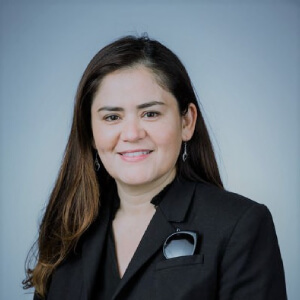
I’m Sandra Ledesma, founder of EdVanna. Like you, I’ve faced the challenges of learning a new language. I started learning English as an adult, and while it was difficult to make progress at first, over time, I developed a system that worked for me. I understand what learning a language can mean for your future, and I’m here to tell you that with the right approach, you can do it. Yes, it’s possible!
I’m Sandra Ledesma, founder of EdVanna. Like you, I’ve faced the challenges of learning a new language. I started learning English as an adult, and while it was difficult to make progress at first, over time, I developed a system that worked for me. I understand what learning a language can mean for your future, and I’m here to tell you that with the right approach, you can do it. Yes, it’s possible!
If you’re looking to efficiently boost your Spanish vocabulary, flashcard apps are a powerful solution. These tools help you track your progress and personalize your learning experience, making it easier to retain new words. In this article, I’ll explain how to use flashcard apps to improve your Spanish vocabulary quickly and effectively.
If you’re looking to efficiently boost your Spanish vocabulary, flashcard apps are a powerful solution. These tools help you track your progress and personalize your learning experience, making it easier to retain new words. In this article, I’ll explain how to use flashcard apps to improve your Spanish vocabulary quickly and effectively, especially if you learn Spanish with native speakers.
The first step is to choose a flashcard app that has the option to set up spaced repetition. This feature is crucial because research shows it is a key factor in learning and retaining information in your long-term memory, especially for those who have mastered English as a second language or are in the process of doing so.
Narrow down your list of words to focus on those connected to specific texts or contexts that resonate with you. This approach is more effective than using generic vocabulary lists, as it helps build meaningful associations with the language. Additionally, it’s important to adjust how frequently you review difficult words so you can give more attention to the areas where you struggle.
Tracking your progress is key—review how many words you’ve mastered, how often you’re reviewing them, and how much time you spend studying compared to your improvement. If your app doesn’t offer built-in statistics, use your phone’s settings to track how much time you spend studying. Many phones can show a summary of hours spent on each app, which can help you stay aware of your study habits.
Another key step is to use spaced repetition because it helps you review words at the optimal intervals, ensuring they stay in your long-term memory. This method focuses on the words you find most difficult, allowing you to prioritize where you need improvement. Additionally, it reduces the need for cramming by gradually spacing out reviews as you become more familiar with each word.
Cramming, on the other hand, is often ineffective for long-term retention. Research has shown that information learned through cramming is typically forgotten quickly, with up to 80% lost within 24-48 hours (Ebbinghaus, 1885). In contrast, spaced repetition leverages the forgetting curve to maximize retention by reinforcing learning over time (Cepeda et al., 2006).
The final step is to create personalized flashcard decks from your own vocabulary lists instead of borrowing generic ones. The more personalized your flashcards, the better they align with your specific learning needs. Tailoring your vocabulary to what you’re actually learning or encountering in real-life contexts makes it much easier to retain and apply new words.
Flashcard technology offers a modern, effective way to master Spanish vocabulary, and by following these five steps, you can make your learning both efficient and personalized. Whether it’s setting up spaced repetition, customizing your decks, or using data to refine your study habits, flashcards allow you to retain vocabulary in a way that works best for you.
Remember, the more specific and tailored your vocabulary lists are, the better your progress will be. As the saying goes, you can only improve what you can measure. Take advantage of the data provided by your flashcard app to monitor your progress, focus on areas where you’re struggling, and adjust your study habits accordingly. This way, you’ll see faster and more consistent improvement in your Spanish learning journey.
Challenge yourself to start today by tracking your study time and making sure you have the spaced repetition option turned on in your app. Consistency and data-driven learning will take your Spanish skills to the next level!
Ebbinghaus, Hermann. “Memory: A Contribution to Experimental Psychology.” Translated by Henry A. Ruger and Clara E. Bussenius, Teachers College, Columbia University, 1913.
Cepeda, Nicholas J., et al. “Distributed Practice in Verbal Recall Tasks: A Review and Quantitative Synthesis.” Psychological Bulletin, vol. 132, no. 3, 2006, pp. 354-380. doi:10.1037/0033-2909.132.3.354.